GLM-5.2 can give a coding workflow room to read more source material, but it does not turn an unstructured repository dump into reliable codebase understanding. A useful evaluation asks whether an agent can recover architecture, trace a bounded dependency, plan a change without widening its scope, and find the tests that decide whether the change is safe. Those are repository tasks, not token-count claims.
What GLM-5.2 Claims—and What Must Be Verified
Z.AI describes GLM-5.2 as a long-horizon model and its official model card describes a one-million-token context capability. Those are useful starting facts, not a substitute for a repository trial. Verify the current model identifier, endpoint, plan tier, context mode, supported tool behavior, and release notes in the GLM-5.2 documentation before adopting it. The Coding Plan uses a dedicated endpoint, while the general API has its own configuration surface; do not assume that a result from one is automatically transferable to the other.
The claim worth testing is narrower: under your task conditions, can the model use the supplied evidence to make a correct, reviewable change? The answer depends on selection, order, permissions, tools, repository state, and the strength of the test oracle. A vendor benchmark can inform a hypothesis, but it cannot establish that your monorepo behaves the same way.
What Codebase Understanding Actually Means
Repository understanding is not the ability to summarize a directory tree. It is the ability to form a bounded, falsifiable model of how a requested change flows through code and operational constraints.
Recognizing module boundaries
The agent should distinguish a public interface from an implementation detail, and a shared library from the service that happens to call it. Ask it to name the entry point, the owning module, the interface crossed, and the files intentionally left out. If it cannot explain those boundaries, more context may simply produce a longer but less auditable answer.
Following dependencies and call chains
A dependency trace should include direction and purpose: which caller invokes an interface, which implementation supplies it, and what contract connects them. That is different from returning every text match for a symbol. A plausible trace also identifies uncertainty, such as generated code, dynamic loading, or an external configuration edge that static reading cannot settle.
Recovering tests and design constraints
The final change is rarely governed by source code alone. Tests, fixtures, ownership rules, migration notes, and design decisions can rule out an otherwise elegant edit. A useful agent response cites the evidence it used and separates “verified by a test or document” from “inferred from the code.”

How Long Context Changes Repository Work
Long context can let a team include more source, tests, specifications, logs, and tool results in one working session. That can reduce repeated retrieval for a well-bounded task. The GLM-5.2 model card describes its 1M-token capability as a model feature, but the usable context in a real workflow still depends on the selected service, configuration, and the material you choose to send.
More source code can be included
Use additional room for evidence with a known job: a contract and its callers, an implementation and its tests, or a migration and its rollback path. Prioritize authoritative files over bulk. A complete package might contain an architecture note, a small dependency path, the task constraints, and the tests expected to change.
Included code can still lack structure and priority
A large prompt does not label which generated file is disposable, which test encodes a product decision, or which API has compatibility obligations. It also does not guarantee that every included file is equally relevant. That is why GLM-5.2 Context Window vs Code Knowledge Graphs remains a useful background comparison: working memory and queryable repository relationships answer different questions.
Where GLM-5.2 May Help in a Large Repository
Treat GLM-5.2 as a candidate reasoner in a controlled workflow, not as an autonomous authority. It may be useful when a task requires a coherent reading set that would otherwise be fragmented across several prompt turns: a cross-service API change, a failing integration test with nearby history, or a refactor with documented invariants. The most defensible benefit is continuity within the selected evidence package.
Start with read-only work. Ask for a change map before an edit, require citations to supplied paths, and compare the map against a human-maintained acceptance checklist. Then constrain the edit to explicit files and run the relevant checks. The model has helped only if the team can show which evidence narrowed the change and which test or review established correctness.
Where Repository Understanding Can Still Break Down
The failure modes are ordinary engineering failures amplified by fast output: a stale branch, a hidden build-time dependency, a missing generated artifact, a test that passes for the wrong reason, or a design rule stored outside the repository. A model can also infer a relationship that looks locally plausible but contradicts a runtime configuration or an ownership boundary.
Before expanding context, make the missing fact explicit. Is the uncertainty about architecture, dependency direction, runtime behavior, or policy? Then retrieve or ask a person for that fact. For a phase-specific approach, see GLM-5.2 Context Engineering, which treats context as a task package rather than a repository export.
Four Questions for Evaluating Real Codebase Understanding
Use the same versioned task suite for every candidate model and repeat it after a meaningful model, prompt, tool, or repository change.
Can it reconstruct the architecture?
Require a map with entry points, modules, interfaces, and evidence paths. Score unsupported assertions separately from omissions.
Can it trace a cross-module dependency?
Give one narrow interface change. The response should identify direct callers, boundary conditions, and any edge it cannot prove.
Can it plan a bounded change?
Ask for a plan before edits. A good plan names affected files, intentional non-changes, risk, and a rollback condition.
Can it identify the relevant tests?
The agent should find existing tests or state that none is known. A new test is not proof by itself; it must exercise the behavior the change claims to preserve.

How to Interpret Evidence and Benchmark Claims
Label vendor-reported scores as vendor-reported, retain the harness version and evaluation date, and avoid moving numbers between incompatible task sets. The SWE-bench project is a useful reminder that repository-task results depend on a versioned environment and test harness. A coding benchmark measures a defined slice of work; it does not certify your repository’s architecture, policy, or deployment behavior.
For internal evidence, retain the prompt or context manifest, model and endpoint, tool permissions, repository revision, task definition, generated diff, test output, and human-review outcome. This record lets a team distinguish a genuine capability change from a different context package. It also makes an earlier result clearly stale when any of those decision-driving inputs changes.
FAQ
Could repository examples already exist in model training?
Possibly. Treat publicly available repositories as potential prior exposure and do not use a memorized-looking answer as proof of general repository understanding. Prefer private or held-out tasks with controlled access, and disclose the repository status when reporting results.
Should teams evaluate more than one programming language?
Yes when production work spans them. Sample the languages, build systems, and test styles that drive real changes; one language can hide a gap in another layer.
How should third-party GLM results be cited?
Name the publisher, model identifier, date, task set, harness, and whether the result is vendor-reported or independently reproduced. Link to the original material and do not turn it into a universal ranking claim.
When does an earlier evaluation become outdated?
When the model or endpoint changes, the context assembly changes, the tools or permissions change, or the repository and its tests materially change. Re-run the smallest representative suite after any of those changes.
Can proprietary repositories be tested without exposing all source code?
Often, by using an approved environment and a minimal task package, but the exact security decision belongs to the organization. Exclude secrets and unnecessary data, log access, and obtain the repository owner’s approval before any external model call.
Conclusion
GLM-5.2’s long-context positioning is worth evaluating, but a useful GLM-5.2 codebase workflow is judged by evidence: a correct architecture map, a bounded dependency trace, an explainable change plan, and relevant tests. Use a code knowledge graph workflow when structured, source-linked relationships are the missing evidence, and use Graphify to keep those relationships reviewable rather than implicit.
Explore this topic
Related posts

GLM-5.2 Context Engineering for Agents
GLM-5.2 context engineering gives coding agents architecture, dependencies and repository memory before complex edits.
Claude Opus Context Engineering for Coding Agents
Claude Opus context engineering: prepare architecture, dependency, decision, and test evidence before multi-file coding-agent work.

Claude Opus 5 Codebase Context: What a Better Model Still Needs
Claude Opus 5 has a large context window, but reliable codebase work still needs repository structure, dependency evidence, tests, and review boundaries.

Kimi K3 Context Window vs Repo Structure
Kimi K3 context window size helps with more code, but repo structure still matters for reliable coding-agent work.

Kimi K3 Context Engineering for Coding Agents
Kimi K3 context engineering helps coding agents use architecture, dependencies and repository memory before editing code.

Macaron Context Engineering for Coding Agents
Macaron context engineering gives coding-agent workflows architecture, dependencies, decisions, and test evidence before multi-file edits.
Latest posts
How to Install DeepSeek Harness: A Developer-Preview Guide to the Plugin-First Coding Agent
Learn how to install DeepSeek Harness from npm or source, understand its plugin-first design, and decide whether a fast-moving developer preview belongs in your coding workflow.
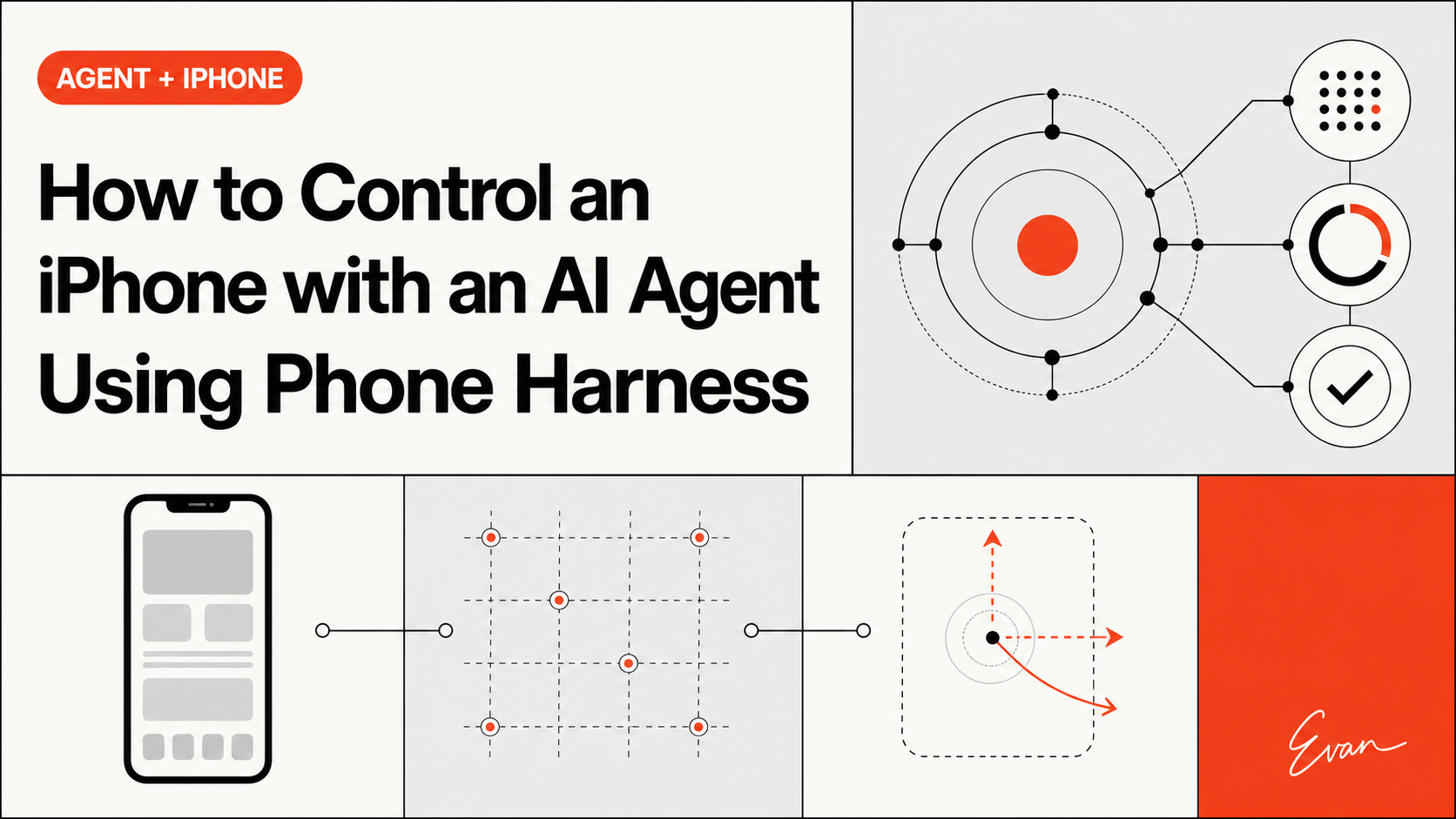
How to Control an iPhone with an AI Agent Using Phone Harness
See how Phone Harness connects an AI agent to a real iPhone through macOS iPhone Mirroring, including setup, OCR, HID input, permissions, and limits.

Symphony Knowledge Graph for Agent Memory
Symphony knowledge graph workflows can give long-running coding agents durable repository memory and system context.
What Is Cowart? A Codex Plugin for Image Editing
Cowart is a third-party Codex plugin that uses a local infinite canvas for visual annotation and image-editing workflows.

Trae Context Engineering for Agents
Trae context engineering gives AI coding agents project rules, architecture context, and repository evidence before complex edits.

Trae Knowledge Graph for Developers
Trae knowledge-graph workflows add repository intelligence beyond IDE chat context and code indexing.