
Trae can search and assemble context from a workspace, but a large repository still needs an explicit task boundary, current indexing, and a human check of cross-module evidence. Treat a useful answer as a hypothesis backed by files, tests, and ownership—not proof that the IDE has understood the whole system.
What Trae Can See in a Repository Workspace
Trae’s current context guidance distinguishes internal context—codebase, files, and terminal logs—from external context such as documentation and searchable web pages. Its #Code, #File, #Folder, and #Workspace references are different ways to give an agent a working set. #Workspace is useful for project-wide questions because Trae says it selects relevant files; it is not a guarantee that every relevant relationship made it into one response. Trae’s context guide also says ignored files are excluded from indexing and context.
Open files and selected context
Open files, a named class, or a selected folder make the request easier to audit. They are best for questions with a known change surface: an API handler, the caller that constructs it, and the test suite that asserts its behavior. State the task, the expected contract, and what must not change before requesting edits.
Indexed files, folders, and symbols
Folder and workspace context can help Trae find a starting point across more code than a manually pasted prompt. Indexing is still a snapshot and a retrieval step. A renamed module, generated client, excluded package, or branch-local change can make a plausible summary incomplete. Confirm the important paths in the file tree and ask the agent to cite the files it used.
Project information that may remain implicit
Architecture decisions, deployment constraints, ownership boundaries, and historical incidents are often not encoded in a symbol graph. Add the specific design note, rule, issue, or test command when it changes the decision. Trae documents document sets and URLs as external context; use that mechanism for stable project material rather than assuming chat history is durable repository memory.
What Large-Codebase Context Actually Requires
Large-codebase context is not a token count. It is a small, reviewable evidence package: the entry point, interface or data contract, adjacent implementation, affected tests, and the constraint that makes the task safe. A Trae context-engineering workflow can make that package repeatable.
For a migration, for example, the package might contain the public endpoint, the old and new schema, one consumer, the contract test, and the rollback condition. Including every directory is less useful if no one can tell which files are authoritative.
A Quick Repository Understanding Check
Run this check before allowing a broad edit. It is a review heuristic, not a benchmark.
Ask for the main entry points
Ask Trae to name the request entry point, the composition root, and the affected public interface, with file paths. Read those paths yourself. If the answer lists only a leaf component for a system change, narrow the task or add the missing boundary.
Trace one feature across modules
Choose one request path and have the agent trace it from input through transformation, persistence or service call, and output. Require it to identify assumptions at each boundary. This reveals whether the answer is grounded in relationships or only in keyword matches.
Locate the tests affected by a change
Ask which unit, integration, and contract tests would fail if the stated behavior changed. The right answer can be “none are present,” but it should name the evidence for that conclusion. Tests are often the fastest way to expose a missing caller or undocumented rule.

Signals That Trae Is Guessing About the Repository
The following signals call for a smaller scope and another evidence pass. They do not prove the tool failed; they show that the proposed change is not yet reviewable.
Repeated file searches
Repeatedly rediscovering the same directories can mean the request lacks an anchor. Give a stable entry point and ask for a bounded call chain instead of another full-workspace summary.
Contradictory module summaries
When two answers disagree about ownership, data flow, or an interface, open the cited files and select the authoritative source. Do not average summaries. Record the decision in a project rule or design document if it will matter again.
Changes that ignore neighboring tests
An implementation that updates a function but not its fixture, contract, or integration test may be incomplete. Ask for the adjacent tests before merging, even if the immediate diff is small.
Recover by Narrowing the Task and Context
Shrink the request to one observable behavior, supply the closest files and tests, then ask for a plan before an edit. Review the plan for skipped dependencies. After the edit, run the named checks and compare the changed surface with the original task. This process turns “workspace context” into evidence a teammate can reproduce.

When External Repository Structure Is Needed
Workspace search helps find text and symbols. It may not represent all of the relationships a team needs: dependency ownership, historical decisions, generated-code provenance, or a service boundary that spans repositories. An external code knowledge graph workflow can model those facts with source and freshness metadata. It supplements Trae; it is not a native Trae or Graphify integration, and it does not decide whether a proposed change is correct.
Team Checklist Before Merging an IDE Agent Change
Before merging, confirm the task has a stated boundary; cited files include the relevant entry point and tests; ignored directories contain no required source; generated or vendor code was handled deliberately; and a reviewer can reproduce the validation. For tool selection, see Best AI Coding Tools. The important question is not whether the agent searched many files, but whether the team can explain why this change is safe.
Keep an evidence record with the task identifier, branch or commit, paths supplied to the agent, paths it cited, commands run, and unresolved questions. That record helps a later reviewer distinguish a valid scoped change from a coincidental green test run. If the task crosses a service boundary, assign an owner for each boundary rather than making one agent response responsible for the full system.
This also makes a failed run useful: the next attempt starts from the verified boundary instead of repeating an ungrounded workspace search.
FAQ
How can users confirm whether indexing is current?
Use a recent file change as a probe, check that Trae can locate it, and compare the cited path with the current branch. Trae’s documentation advises allowing indexing time and refreshing document sources when they change. Treat a mismatch as a reason to re-scope, not as a prompt to trust a stale answer.
Should generated and vendor files be excluded?
Usually exclude bulky generated or vendor directories unless the task changes their contract or regeneration path. Keep the source schema, generator configuration, and relevant output available when they determine behavior.
How does remote development affect repository context?
Verify which workspace and branch the tool is attached to, then repeat the entry-point and test check there. Remote access can change available files, paths, credentials, and generated artifacts.
Which sensitive directories should never be exposed?
Exclude secrets, credentials, private keys, production exports, and any directory whose access is not needed for the task. Trae’s Ignore Files control is designed to keep specified paths out of indexing; review its scope for the current release.
Should project context rules be version controlled?
Yes, when a rule affects code review, testing, ownership, or a recurring agent task. Versioning makes the source reviewable and lets a branch carry the rule that governed its change.
Conclusion
Trae large-codebase work becomes safer when workspace context is treated as retrieval, not omniscience. Start with a bounded behavior, ask for file-backed evidence, recover missing relationships through tests and documentation, and preserve the decision trail. Graphify can be one source-linked layer for repository structure, while the reviewer remains responsible for the merge.
Explore this topic
Related posts
What Is Cowart? A Codex Plugin for Image Editing
Cowart is a third-party Codex plugin that uses a local infinite canvas for visual annotation and image-editing workflows.

Trae Context Engineering for Agents
Trae context engineering gives AI coding agents project rules, architecture context, and repository evidence before complex edits.
Cowart vs ChatGPT Image Editing
Cowart vs ChatGPT compares visual annotation workflows with chat-based image editing for precise revisions.

Cowart Use Cases for UI Mockups and Product Visuals
Cowart use cases include UI mockup edits, product visuals, annotated screenshots and creative iteration in Codex.

Cowart Tutorial for Codex Image Annotation
Cowart tutorial: install the Codex plugin, annotate images, capture context and request precise visual edits.

CC Switch Codebase Context Loss
Learn what CC Switch codebase context does not transfer when you change providers, and use a repository evidence layer to reduce context loss.
Latest posts
How to Install DeepSeek Harness: A Developer-Preview Guide to the Plugin-First Coding Agent
Learn how to install DeepSeek Harness from npm or source, understand its plugin-first design, and decide whether a fast-moving developer preview belongs in your coding workflow.
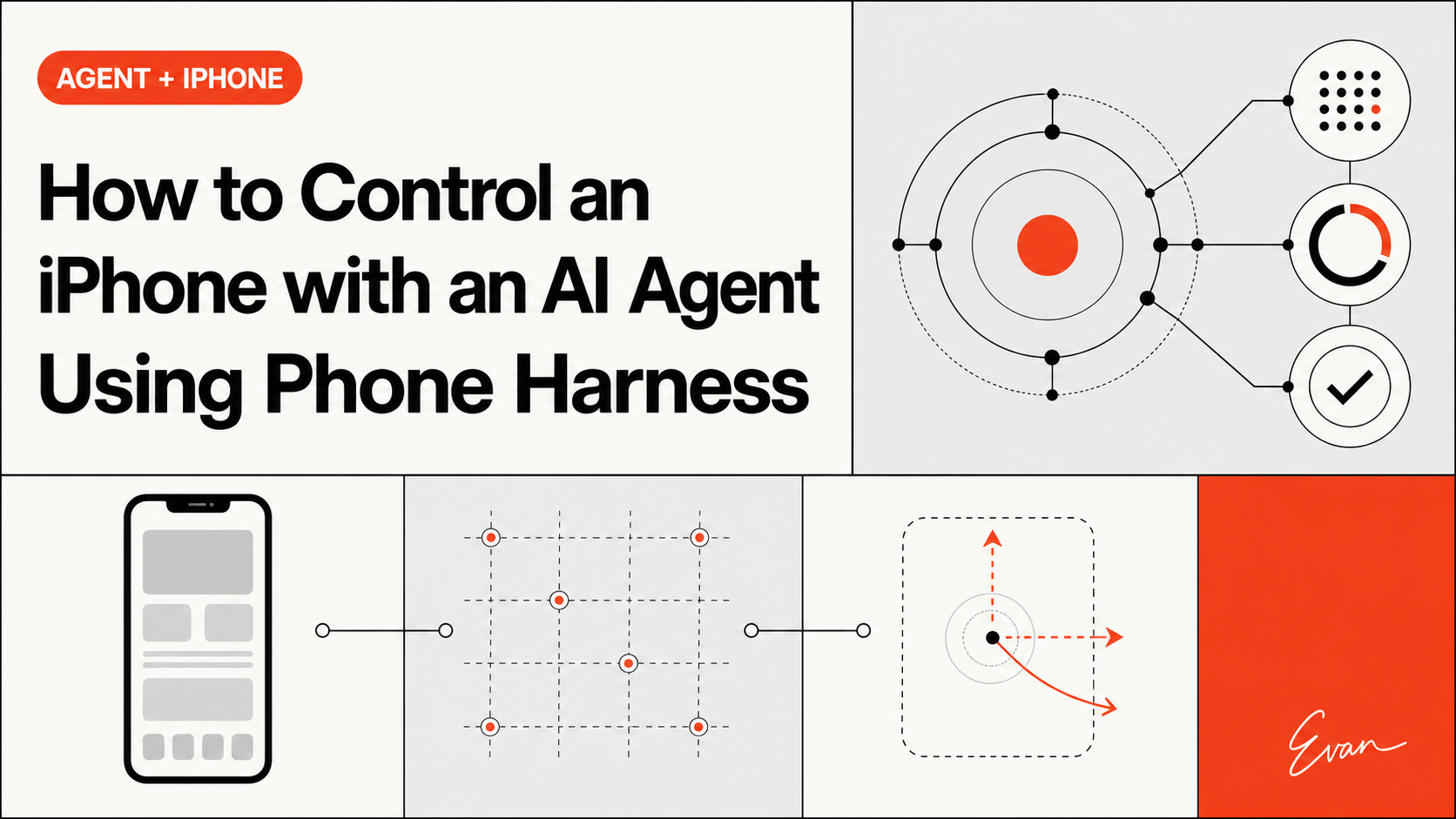
How to Control an iPhone with an AI Agent Using Phone Harness
See how Phone Harness connects an AI agent to a real iPhone through macOS iPhone Mirroring, including setup, OCR, HID input, permissions, and limits.

Symphony Knowledge Graph for Agent Memory
Symphony knowledge graph workflows can give long-running coding agents durable repository memory and system context.
What Is Cowart? A Codex Plugin for Image Editing
Cowart is a third-party Codex plugin that uses a local infinite canvas for visual annotation and image-editing workflows.
Trae Context Engineering for Agents
Trae context engineering gives AI coding agents project rules, architecture context, and repository evidence before complex edits.

Trae Knowledge Graph for Developers
Trae knowledge-graph workflows add repository intelligence beyond IDE chat context and code indexing.